

Getting denied for a loan feels personal, even when it technically is not. One moment you are trying to solve a financial problem, cover an emergency expense, or create breathing room in your budget. The next, you are staring at a rejection notice wondering what went wrong.
The frustrating part is that many borrowers never receive a clear explanation. And while credit rejection rates have improved in recent years, loan denials still affect millions of Americans. According to the Federal Reserve Bank of New York’s Survey of Consumer Expectations, 15.9 percent of consumers reported being denied credit applications over a twelve month period in early 2025.
Some assume their credit score ruined everything. Others panic and start applying everywhere at once, accidentally making the situation worse.
The reality is usually more manageable than it feels in the moment.
Loan denials happen for many reasons, and not all of them mean you are financially irresponsible or permanently ineligible for borrowing. Sometimes it comes down to timing. Sometimes the application contained inconsistent information. Sometimes the lender simply was not the right fit for your situation.
Understanding why your application was denied is the first step toward improving your chances next time.
At FlexMoney, we believe borrowers deserve transparency, practical guidance, and access to online borrowing solutions that support real financial situations instead of adding confusion to them.
What You’ll Learn
- The most common reasons loan applications are denied
- What lenders typically review during the approval process
- Mistakes that quietly reduce approval chances
- Steps you can take after a denial
- How to improve future applications responsibly
- When alternative lending options may make sense
1. Your Credit Score Raised Concerns
This is one of the most common reasons borrowers hear “no.”
Many lenders use credit scores to estimate risk. A lower score may suggest missed payments, high balances, defaults, or inconsistent repayment history.
That said, loan approval is rarely based on one number alone. Some lenders place significant weight on credit scores. Others focus more heavily on income stability, banking activity, and overall financial behavior.
If you have recently missed payments, maxed out credit cards, or experienced collections activity, lenders may hesitate to approve your application.
What To Do
Start by reviewing your credit reports carefully. Errors happen more often than people realize.
According to the Consumer Financial Protection Bureau, common credit report issues can include incorrect account information, inaccurate payment histories, outdated balances, and even accounts that do not belong to you. Any of these errors can potentially affect lending decisions and approval outcomes.
Then focus on gradual improvements:
- Make payments on time
- Reduce outstanding balances
- Avoid applying for multiple loans at once
- Keep older accounts open when possible
Improving your credit profile takes time, but even small changes can strengthen future approval chances.
2. Your Debt Load Is Already Too High
Lenders want reassurance that you can realistically manage another payment. Even applicants with decent credit can be denied if too much of their monthly income is already committed to existing debt obligations.
This is where debt to income ratio becomes important. If your rent, credit cards, vehicle payments, installment loans, and other obligations consume a large portion of your income, lenders may see additional borrowing as risky.
This is especially common among borrowers searching for payday loans online while already carrying multiple active balances.
What To Do
Take a realistic look at your monthly obligations.
You may improve approval odds by:
- Paying down smaller balances first
- Consolidating existing debt
- Increasing income where possible
- Borrowing a smaller amount
Responsible borrowing habits matter far more than chasing the largest possible approval amount. Before accepting any loan, it is also important to understand what happens if you miss a loan payment and how missed payments can affect future borrowing opportunities, fees, and overall financial stability.
3. Your Income Could Not Be Verified
Lenders need confidence that your income is stable, consistent, and sufficient to support repayment.
Applications are commonly denied when:
- Income documentation is incomplete
- Direct deposits cannot be verified
- Employment appears inconsistent
- Reported income does not match banking activity
Freelancers, contractors, gig workers, and self employed applicants sometimes experience additional scrutiny because income patterns may fluctuate month to month.
What To Do
Before you apply for a personal loan, make sure your information is accurate and easy to verify.
Gather documents such as:
- Recent pay stubs
- Bank statements
- Proof of direct deposit income
- Government identification
Consistency matters. Lenders are often looking for reliable patterns more than perfection.
4. Your Application Included Incorrect Information
A simple typo can trigger a denial. Incorrect income figures, mismatched addresses, incomplete banking information, or inaccurate employment details may create red flags during verification.
Online lending systems rely heavily on automated reviews. If information does not align properly, applications may be flagged automatically before a human even reviews them.
What To Do
Slow down before submitting your application.
Double check:
- Banking details
- Contact information
- Employment history
- Income amounts
- Identification numbers
Accuracy helps create a smoother approval process and reduces avoidable delays.
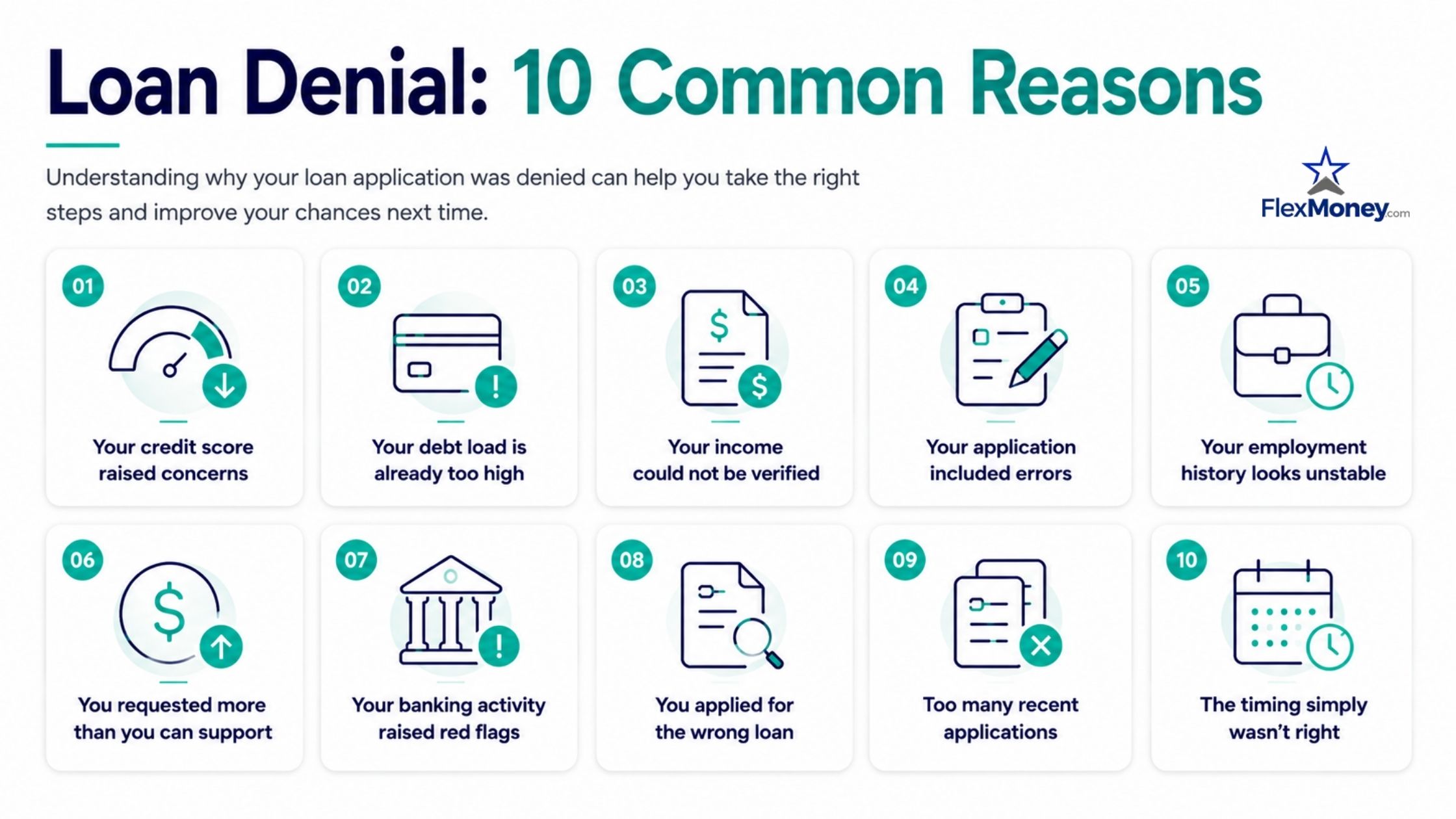
5. Your Employment History Looks Unstable
Frequent job changes can sometimes create concern for lenders. This does not mean changing careers is bad. Many people switch jobs for better opportunities, higher pay, or healthier work environments.
However, from a lending perspective, recent instability may increase perceived risk. Applicants with very new employment histories may face additional verification requirements.
What To Do
If you recently changed jobs, it may help to wait until you have a few months of consistent income history before applying again.
If waiting is not realistic, look for lenders that consider broader financial patterns rather than focusing exclusively on employment longevity.
Some borrowers also explore fast cash loans online during transitional periods because approval requirements may differ from traditional lending institutions.
6. You Requested More Than You Could Realistically Support
Borrowing more money than necessary can reduce approval odds quickly. Lenders evaluate whether the requested amount aligns with your income, repayment ability, and existing financial obligations.
Many lenders also review debt to income ratio calculations when evaluating affordability, since this helps determine how much additional debt a borrower can realistically manage.
Asking for significantly more than you reasonably need may signal financial strain or increased repayment risk.
What To Do
Be strategic about your request amount. Calculate exactly what you need and avoid inflating the figure “just in case.”
Smaller, manageable borrowing requests are often viewed more favorably than aggressive loan amounts.
7. Your Banking Activity Raised Red Flags
Many online lenders review banking behavior during the approval process. Frequent overdrafts, negative balances, irregular deposits, gambling transactions, or highly inconsistent cash flow patterns may create concern.
This does not automatically mean denial, but it can influence lending decisions.
What To Do
Healthy banking habits can improve future applications.
Try to maintain:
- Consistent direct deposits
- Stable account balances
- Fewer overdrafts
- Predictable transaction patterns
If you are unsure what lenders typically review, it may help to learn more about how to qualify for an online payday loan before applying again.
8. You Applied for the Wrong Type of Loan
Not every loan product fits every situation.Some loans are designed for emergency expenses. Others are intended for longer term borrowing, debt consolidation, or major purchases.
Applying for a loan product that does not align with your financial profile or intended use may increase the likelihood of denial.
What To Do
Research loan options carefully before submitting applications.
Different lenders evaluate:
- Credit history differently
- Income requirements differently
- Loan purposes differently
- Banking activity differently
Understanding these differences helps borrowers make more informed decisions instead of applying randomly across multiple lenders.
9. Too Many Recent Applications Hurt Your Profile
Applying repeatedly within a short period can create concern. Multiple inquiries may suggest financial distress to lenders, especially if several applications were denied recently.
Ironically, panic applying after a denial often makes approval more difficult.
What To Do
Pause before submitting another application immediately.
Instead:
- Review your denial reasons carefully
- Strengthen weak areas first
- Compare lender requirements thoughtfully
- Use prequalification options when available
Before reapplying, it may also help to review your credit reports through AnnualCreditReport.com to check for outdated information or reporting errors that could affect future lending decisions.
Sometimes the smartest financial move is waiting a few weeks before trying again.
10. The Timing Simply Wasn’t Right
Sometimes a denial is less about who you are and more about what is happening financially at that moment.
Recent life changes can affect approval outcomes:
- Divorce
- Relocation
- Temporary income reduction
- Medical expenses
- Increased interest rates
- Recent missed payments
Financial pressure often arrives in waves, and lenders evaluate applications based on current risk conditions.
What To Do
Do not treat one denial as a permanent verdict on your financial future. Instead, focus on understanding your denial, stabilizing your finances where possible, and building stronger application habits moving forward.
If you still have questions about your options, you can always speak with our support team for additional guidance.
What To Do Immediately After a Loan Denial
A denial does not mean you should immediately apply somewhere else out of frustration.
Instead:
- Review the lender’s explanation carefully
- Check your credit reports for errors
- Reduce unnecessary applications
- Improve documentation accuracy
- Pay down debt where possible
- Reevaluate how much you truly need to borrow
The Consumer Financial Protection Bureau also explains that lenders using information from your credit report are generally required to provide details about the decision and how you can access the report used during the review process. Most importantly, avoid emotionally driven borrowing decisions.
Financial stress can make quick money feel urgent, but thoughtful borrowing decisions usually create better long term outcomes.

Key Takeaways
- Loan denials happen for many different reasons, not just bad credit
- Debt load, income verification, and application accuracy matter significantly
- Multiple applications in a short timeframe can reduce approval chances
- Borrowing only what you need improves financial stability
- Understanding denial reasons helps improve future applications
- Responsible borrowing habits support healthier long term financial outcomes
Frequently Asked Questions
Why was my loan application denied if my credit score is decent?
Credit scores are only one part of the approval process. Lenders may also review income consistency, debt levels, banking activity, employment stability, and application accuracy before making a decision.
Does getting denied for a loan hurt your credit score?
The denial itself usually does not hurt your score. However, multiple hard inquiries from repeated applications within a short period may impact your credit profile over time.
How long should I wait before applying again?
That depends on why you were denied. In some cases, correcting inaccurate information may allow you to reapply quickly. In other situations, improving credit, income stability, or debt levels may take longer.
Can I still qualify if I have alternative income sources?
Possibly. Some lenders accept income from self employment, freelance work, disability benefits, pensions, or other recurring sources. Requirements vary between lenders.
Should I apply for the maximum amount available?
Not necessarily. Borrowing only what you realistically need may improve approval odds and reduce long term repayment pressure.
What should I understand before borrowing online?
It is important to review repayment terms carefully, understand fees and interest costs, and make sure the loan fits comfortably within your budget before accepting any loan agreement.
The Bottom Line
A denied application can feel discouraging, but it does not mean you are out of options forever. Most denials come down to specific financial factors that can often be improved with better preparation, stronger documentation, healthier borrowing habits, and more realistic loan expectations.
The goal is not simply getting approved at any cost. The goal is borrowing responsibly in a way that supports your financial stability rather than adding additional stress. At FlexMoney, we believe access to flexible online borrowing solutions should come with transparency, education, and realistic expectations that help borrowers make informed financial decisions.
Understanding why lenders say no today can help position you for smarter financial decisions tomorrow.