
There was a time when monthly bills felt predictable. Rent. Utilities. Maybe a phone bill and internet. Most people could glance at their bank account and know roughly where their money was going each month. That version of personal finance barely exists anymore.
Today, modern spending is built around subscriptions. Streaming platforms. Food delivery memberships. Fitness apps. Cloud storage. Gaming passes. AI tools. Grocery memberships. Beauty boxes. Meal kits. Productivity software. Even cars, clothing, and home appliances are increasingly moving toward recurring payment models.
Individually, most subscriptions feel manageable. Ten dollars here. Fifteen there. A discounted trial membership that quietly rolls into auto renewal later. But collectively, subscription services are reshaping how people budget, spend, save, and borrow money in ways many consumers do not fully notice until their monthly cash flow starts tightening.
The issue is not necessarily the subscriptions themselves. Many provide real convenience and value. The challenge is how recurring monthly expenses slowly become permanent parts of financial life without receiving the same attention as larger fixed bills. Understanding that shift matters more than ever.
What You’ll Learn
- How subscription services are changing personal finance habits
- Why recurring monthly expenses are harder to track than traditional bills
- The hidden impact of long-term subscription commitments
- Smart ways to review, pause, and rotate subscriptions
- How subscriptions can affect borrowing behavior and cash flow
- Practical budgeting strategies for managing modern recurring expenses responsibly
The Subscription Economy Quietly Changed How People Spend
Subscription based spending works differently from traditional purchasing because it removes friction. Consumers no longer actively decide to buy something every month. The payment simply happens automatically.
That psychological shift changes spending behavior significantly.
A one time purchase forces evaluation. Is this worth it right now? Do I actually need this? Can I afford it today?
Subscriptions bypass many of those questions because the decision only happens once at the beginning. After that, the expense blends into the background.
The Federal Trade Commission has warned consumers about how automatic renewals and negative option subscriptions can quietly continue charging users long after the initial sign up process.
This is part of why recurring monthly expenses have become one of the biggest challenges in modern budgeting monthly expenses effectively. Small automated charges often escape the same scrutiny people apply to larger purchases, even though their cumulative impact can become substantial over time.
A household with ten or fifteen active subscriptions may easily spend several hundred dollars monthly without fully realizing it. That money affects everything from emergency savings to debt repayment flexibility to everyday financial breathing room.
When Convenience Starts Competing With Cash Flow
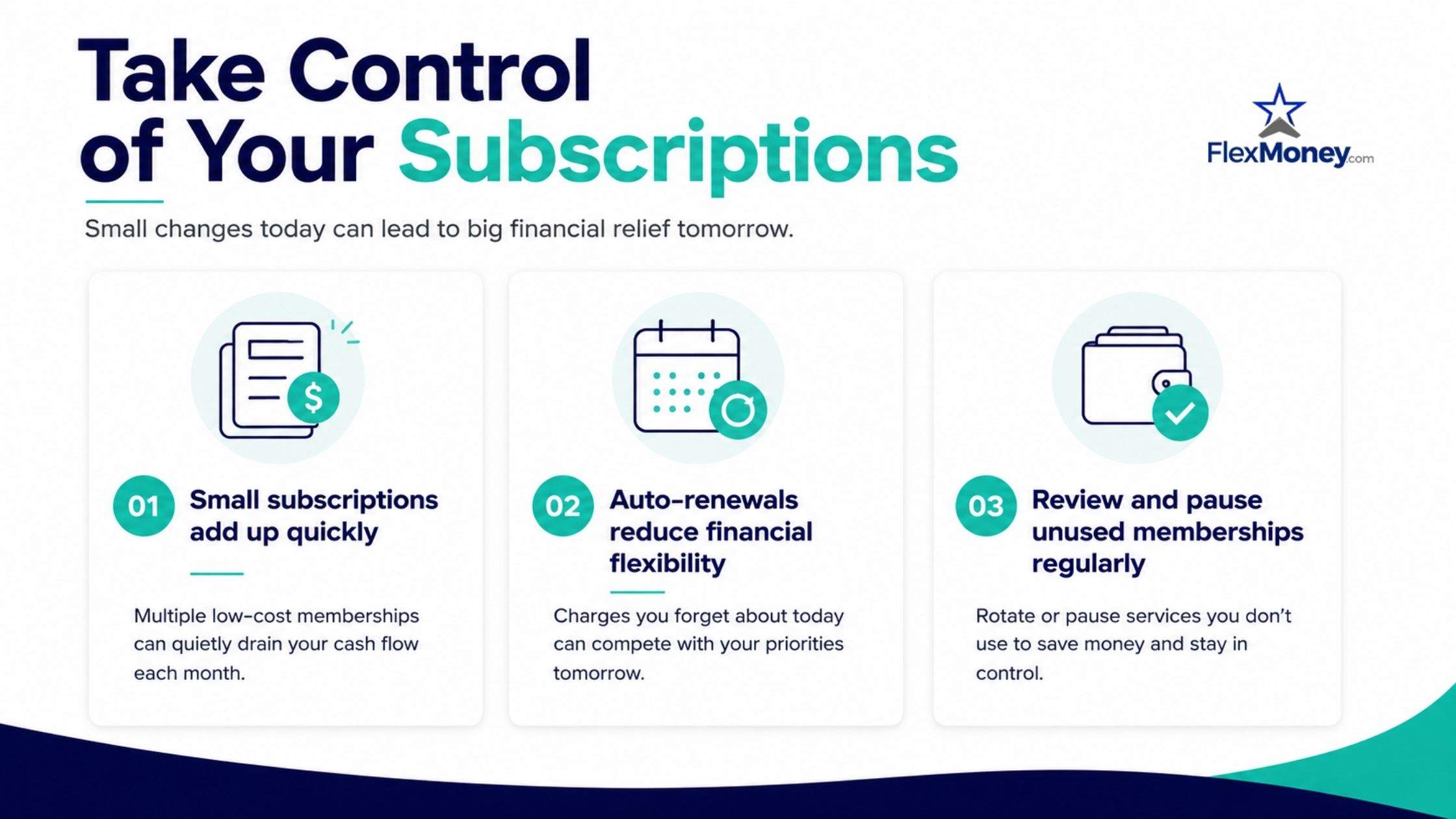
The real issue with subscription services and personal finance is not usually one expensive membership. It is the layering effect.
A streaming platform becomes two. Then three.
A free trial becomes a permanent subscription.
A discounted annual renewal quietly increases after the first year.
Digital convenience often creates financial invisibility.
People rarely sit down intending to overextend themselves through subscriptions. But because charges are fragmented across different dates and categories, they become harder to track psychologically.
This becomes especially important during periods of inflation, rising living costs, or temporary income disruption. Suddenly, recurring charges that once felt harmless begin competing with groceries, transportation, utility bills, or savings goals.
Recent Federal Reserve household financial research also shows that many Americans continue facing challenges maintaining emergency savings and financial flexibility during periods of rising living costs. That is often when consumers realize their cash flow is far less flexible than they thought.
For some borrowers, tightening monthly budgets can eventually create reliance on short term borrowing solutions to bridge temporary gaps between paydays and expenses. Responsible borrowing matters in those situations, especially when consumers are already carrying multiple recurring financial commitments.
For individuals comparing short term lending solutions carefully, understanding how recurring spending affects affordability is an important part of evaluating options like FlexMoney payday loans.
The Problem With Long-term Subscription Commitments
Long-term subscription commitments create a unique financial challenge because they often survive long after priorities change. People evolve faster than their subscriptions do.
A fitness app purchased during a health kick may continue billing months after usage stops. A productivity platform may remain active long after a career transition. Entertainment services may continue renewing automatically despite declining use.
This is where subscription fatigue begins affecting personal finance decisions. Consumers become financially committed to services they no longer actively value.
Research published through the National Bureau of Economic Research has also explored how consumer inattention contributes to ongoing subscription renewals that many users underestimate over time.
The problem becomes even larger when subscriptions are bundled with annual contracts, early cancellation fees, or promotional pricing structures that encourage long term lock in.
Many people underestimate how much these ongoing commitments reduce financial flexibility over time.
Even relatively small recurring charges limit discretionary income and reduce room for unexpected expenses, emergency savings, or debt reduction goals.
Financial pressure rarely arrives all at once. More often, it accumulates quietly through dozens of small recurring obligations that eventually become difficult to sustain comfortably.
When unexpected expenses appear during already tight financial periods, some consumers may begin exploring short term financial solutions to help stabilize cash flow responsibly. For those evaluating their options carefully, it may help to apply for an online loan today, but only after reviewing existing recurring expenses and overall repayment affordability.
The Rise of Subscription Driven Budget Blindness
One of the biggest shifts in modern budgeting monthly expenses is the growing disconnect between active spending and passive spending. Passive spending happens automatically.
Academic research on payment frequency and consumer spending behavior has also found that recurring payment structures can influence how consumers perceive spending and overall financial comfort.
People tend to emotionally register purchases they actively make in stores or online. Subscription charges, however, often happen in the background without conscious attention.
That creates what many financial experts describe as budget blindness. Consumers know they are spending money, but they lose visibility into where recurring payments are flowing month after month.
This becomes especially dangerous when income changes unexpectedly. Job interruptions, seasonal work fluctuations, medical expenses, or rising living costs can expose how fragile monthly budgets have become underneath dozens of recurring subscriptions.
In some situations, consumers may temporarily explore online loan options for unexpected expenses while working to stabilize short term cash flow disruptions. The key is ensuring borrowing decisions remain realistic and manageable within the context of existing financial obligations.
Financial flexibility becomes much harder to maintain when too much income is already committed before each month even begins.
Pausing and Rotating Subscriptions Can Create Real Financial Relief
One of the most effective money-saving strategies for subscriptions is learning that subscriptions do not always need to remain active permanently.
Many consumers assume cancelling means losing access forever. In reality, pausing and rotating subscriptions often creates far healthier financial habits.
For example:
- Rotate streaming services every few months instead of maintaining multiple subscriptions simultaneously
- Pause fitness or wellness apps during periods of lower usage
- Temporarily cancel subscription boxes that create unnecessary spending
- Review family plans or bundled services for overlapping features
- Reevaluate annual memberships before automatic renewals occur
Small adjustments create meaningful savings surprisingly quickly. Pausing and rotating subscriptions also restores intentionality to spending decisions. Consumers become more aware of what they genuinely use versus what simply renews automatically in the background.
This type of regular subscription review can significantly improve long term financial awareness and cash flow management.
It also reduces the likelihood of reaching for borrowing solutions unnecessarily during tighter financial periods. That being said, there are situations where responsible short term borrowing can help consumers manage unexpected financial disruptions without falling behind on essential expenses. For consumers navigating temporary financial gaps, understanding how much should you responsibly borrow can help support more realistic and manageable financial decisions.
Why Subscription Spending Is Changing Borrowing Behavior
Modern borrowing patterns increasingly reflect recurring digital lifestyles. Many consumers are not necessarily borrowing because of one large emergency expense alone. Sometimes financial strain develops gradually because recurring obligations reduce available monthly cash flow over time.
This is especially true for younger consumers navigating rising housing costs, inflation, subscription heavy lifestyles, and unpredictable economic conditions simultaneously.
The challenge is not that subscription services directly cause debt. Rather, they can narrow financial margins enough that even small disruptions create pressure. That is why responsible borrowing conversations matter.
Consumers considering payday loans online for short-term needs should first understand their full recurring expense picture clearly. Knowing exactly where money is going every month allows borrowers to make more informed financial decisions and avoid creating additional strain. Short term financial tools should support stability, not worsen ongoing budget challenges.

Financial Awareness Is the New Budgeting Skill
Traditional budgeting used to focus heavily on large fixed expenses. Today, financial awareness requires tracking dozens of smaller recurring commitments across multiple platforms and services.
Consumer.gov recommends creating a clear monthly budget that tracks recurring expenses carefully so consumers can better understand where their money is going each month.
That means modern consumers need more active subscription management habits than previous generations did.
A strong regular subscription review process may include:
- Reviewing bank statements monthly
- Tracking all recurring digital charges in one document or budgeting app
- Cancelling unused trial memberships immediately
- Setting reminders before annual renewals
- Evaluating whether subscriptions still align with current priorities
- Separating genuine needs from convenience based spending
Even one monthly review can reveal surprising opportunities to improve cash flow. For individuals managing temporary financial gaps carefully, solutions like online lending should always be approached thoughtfully. Before choosing to get a fash cash loan online, consumers benefit from reviewing recurring expenses first to determine whether subscription reductions could ease short term pressure naturally.
Subscription Services Are Not Inherently Bad. But They Require Active Management
Subscription services offer real benefits. Convenience. Accessibility. Entertainment. Flexibility. Productivity.
The issue is not whether subscriptions are good or bad. The issue is whether consumers remain fully aware of how those recurring charges shape their financial lives over time.
Modern financial health increasingly depends on visibility. People who actively manage recurring monthly expenses often maintain stronger cash flow flexibility, healthier budgeting habits, and greater confidence during financially uncertain periods.
Consumers who ignore subscription creep, however, may slowly lose control over where their money is going each month. That distinction matters.
Financial stability today is not just about how much money someone earns. It is also about how intentionally they manage the growing number of automated financial commitments competing for that income every single month.
Key Takeaways
- Subscription services are changing how consumers manage personal finances and monthly budgeting
- Small recurring expenses can accumulate into major long term financial commitments
- Regular subscription reviews help improve visibility and reduce unnecessary spending
- Pausing and rotating subscriptions can create meaningful financial flexibility
- Subscription heavy lifestyles may reduce available cash flow during emergencies
- Responsible borrowing decisions require understanding all existing recurring obligations
- Active financial awareness is becoming one of the most important modern budgeting skills
Frequently Asked Questions
How do subscription services affect personal finance?
Subscription services affect personal finance by creating recurring monthly expenses that can gradually reduce available cash flow. While individual subscriptions may appear affordable, multiple ongoing charges can significantly impact budgeting, savings, and overall financial flexibility over time if not reviewed regularly.
Why are recurring monthly expenses harder to track?
Recurring monthly expenses are often automated, which makes them less noticeable psychologically than one time purchases. Because charges happen passively in the background, consumers may lose visibility into how much they are spending collectively across multiple subscription services each month.
What are the best money-saving strategies for subscriptions?
Effective money-saving strategies for subscriptions include cancelling unused services, rotating entertainment platforms, pausing memberships temporarily, reviewing annual renewals carefully, and tracking recurring charges monthly. Small adjustments can improve cash flow and reduce unnecessary long term financial commitments significantly.
Can subscriptions contribute to borrowing needs?
Yes. Subscription heavy spending can reduce available monthly cash flow, making households more vulnerable during unexpected financial situations. Some consumers may explore borrowing solutions during tighter periods if recurring expenses limit their ability to manage emergency costs comfortably.
How often should you review subscriptions?
A regular subscription review should ideally happen once per month. Reviewing bank statements and recurring charges regularly helps consumers identify unused memberships, avoid unnecessary renewals, and maintain stronger awareness of their overall financial obligations and spending patterns.
What should borrowers consider before taking out a short term loan?
Borrowers should review their full monthly budget, recurring subscriptions, and repayment ability before pursuing short term lending solutions. Understanding how much to responsibly borrow can help consumers make more informed borrowing decisions that align with their actual financial situation.
Final Thoughts
Subscription services are now deeply woven into everyday life. Most consumers will continue using them in some form because they provide convenience, flexibility, and accessibility modern lifestyles increasingly depend on.
But convenience works best when paired with awareness.Understanding how recurring subscriptions affect budgeting monthly expenses allows consumers to make stronger financial decisions, maintain healthier cash flow, and reduce unnecessary financial pressure over time.
For individuals navigating temporary financial challenges responsibly, exploring solutions like online loan options for unexpected expenses may provide short term support when used carefully within a realistic budget plan.
If you are evaluating your financial options and need additional guidance, you can also contact FlexMoney today to learn more about available lending solutions and responsible borrowing support.