
Getting approved for your first installment loan can feel like a huge relief. The stress that pushed you to apply may finally feel manageable, and seeing the funds hit your account can create a sense of breathing room again. But for many first time borrowers, approval also brings a new question almost immediately: now what?
An installment loan is a type of loan that provides borrowers with a lump sum upfront and requires repayment through scheduled payments over a fixed period of time. Unlike revolving credit, installment loans follow a predictable repayment structure, which can make budgeting easier and reduce uncertainty for borrowers who want a clearer financial plan. According to the Consumer Financial Protection Bureau, installment loans follow fixed repayment schedules that help borrowers better understand how much they owe and when payments are due.
The first few weeks after approval matter more than most people realize. This is where borrowers build repayment habits, learn how installment loans affect their finances, and figure out how to use credit responsibly without feeling overwhelmed.
At FlexMoney, the goal is not simply helping borrowers get approved. The goal is helping borrowers understand the process clearly so they can make informed financial decisions with confidence.
What You’ll Learn
- A first installment loan provides a lump sum that is repaid through fixed scheduled payments.
- The first few weeks after approval are important for building healthy repayment habits.
- Understanding repayment dates, budgeting, and credit impact helps avoid common mistakes.
- Installment loans differ from revolving credit because they follow a structured payoff schedule.
- Responsible borrowing starts with choosing a payment plan that realistically fits your budget.
Week 1: Understanding What You Just Signed Up For
The first week after approval is all about clarity. Before spending any of the funds, take time to fully understand the terms of your loan agreement.
This includes:
- Your payment amount
- Your repayment schedule
- Interest charges
- Due dates
- Loan duration
- Any applicable fees
The Consumer Financial Protection Bureau also recommends reviewing all loan fees and repayment obligations carefully before accepting financing.
Many first time borrowers assume the hardest part is getting approved. In reality, successful borrowing starts with understanding how the loan works after funding arrives.
This is also the point where many people begin comparing installment loans to other borrowing options. Unlike credit cards or lines of credit, installment loans provide a fixed repayment structure. That predictability often makes them easier to manage for borrowers who prefer stable monthly budgeting.
Borrowers researching alternatives to revolving debt often begin by learning more about FlexMoney installment loans and how structured repayment plans work.
Week 2: Your Funds Arrive. Now Comes the Real Decision
Once the money lands in your account, the emotional pressure often fades quickly. This is where responsible borrowing matters most.
A first installment loan should ideally solve a specific financial need, not create new financial strain. Common uses include:
- Emergency expenses
- Car repairs
- Unexpected bills
- Temporary cash flow gaps
- Essential home expenses
This is also where borrowers sometimes make avoidable mistakes. Spending the entire amount immediately without a repayment strategy can create stress later in the loan term.
One of the smartest things borrowers can do during week two is create a realistic repayment plan before the first payment is due. Even a simple monthly budget can reduce the chances of missed payments later.
Borrowers comparing different borrowing options often begin to explore flexible installment loan options that align better with their actual income and repayment capacity.
Week 3: Learning How Installment Loans Affect Your Credit
Many first time borrowers ask the same question after approval: “Will this help or hurt my credit score?”
The answer depends largely on repayment behavior. Consistent on time payments may help strengthen your credit profile over time. Missed payments, however, can negatively affect your credit standing and create additional financial stress.
The Federal Trade Commission explains that payment history remains one of the biggest factors influencing your credit profile over time.
Installment loans differ from revolving credit accounts because they follow a fixed payoff schedule. Credit cards allow balances to continuously revolve, while installment loans gradually reduce the balance until the loan is fully repaid.
This structured repayment model can help borrowers build more disciplined financial habits, especially when payments are made consistently.
Understanding the difference between installment loans and products like online payday loans can also help borrowers choose financial products that better fit longer term repayment goals.
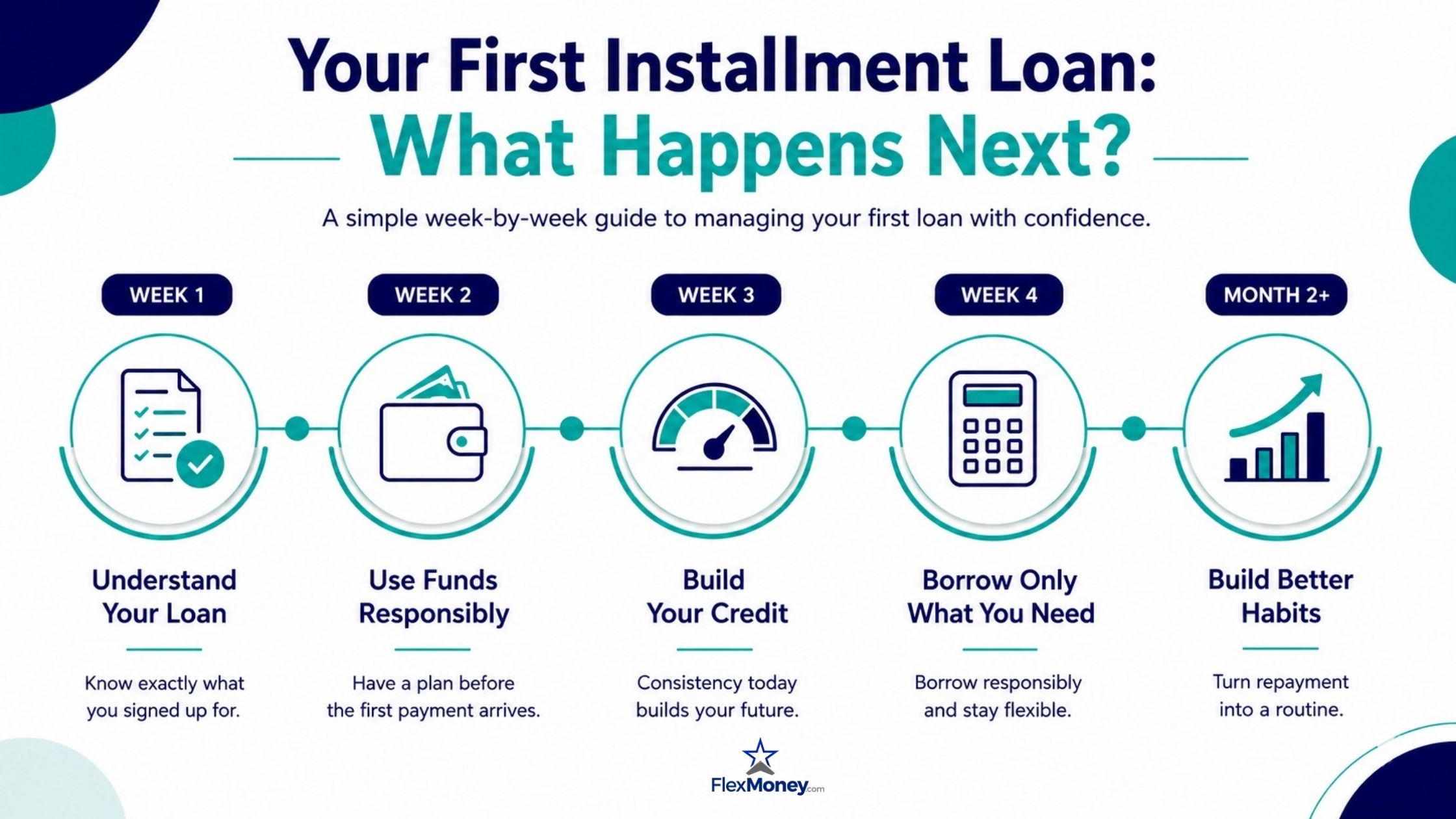
Week 4: Why Loan Amount Matters More Than Most People Think
By week four, borrowers usually settle into the reality of repayment. This is often when people realize that borrowing responsibly is less about approval and more about sustainability.
One of the most common first time borrowing mistakes is taking more money than necessary. Larger loan amounts may increase payment obligations and reduce monthly financial flexibility.
Responsible borrowing starts with evaluating:
- Your actual financial need
- Your income consistency
- Existing monthly expenses
- Emergency savings
- Future financial obligations
This is especially important for borrowers applying for unsecured loans, which do not require collateral but still carry repayment responsibilities.
Secured loans and unsecured loans both fall under the broader category of installment loans, but they operate differently. Secured loans involve collateral, while unsecured loans rely more heavily on creditworthiness and income evaluation.
Borrowers looking into responsible borrowing strategies often benefit from learning more about choosing the right loan amount before committing to a repayment plan.
Month 2: Building Better Financial Habits
After the first month, installment loan payments typically become part of the borrower’s regular financial routine.
This stage matters because consistency is what separates manageable borrowing from overwhelming debt.
Some helpful habits include:
Automating Payments.
Automatic payments can reduce the risk of missed due dates and late fees.
Tracking Your Budget Weekly.
Even small spending adjustments can make repayment easier over time.
Avoiding Additional Unnecessary Debt.
Taking on multiple new debts during repayment can increase financial pressure quickly.
Monitoring Your Credit.
Checking your credit periodically can help borrowers track progress and identify issues early.
USA.gov also recommends regularly reviewing your credit activity and maintaining healthy repayment habits to improve long term financial stability.
This is also when many borrowers begin to understand the broader benefits and drawbacks of installment loans.
Pros of Installment Loans
- Predictable payments
- Fixed repayment timeline
- Easier budgeting
- Potential credit building opportunities
Cons of Installment Loans
- Interest costs over time
- Penalties for missed payments
- Financial strain if borrowing exceeds affordability
Borrowers researching their next financial step may eventually decide to apply for an installment loan online after understanding how repayment structures fit into their overall financial goals.
What Happens If You Miss a Payment?
Missing a payment does not automatically mean financial disaster, but it is something borrowers should address quickly.
The earlier borrowers communicate with lenders, the more options may be available. Ignoring missed payments can lead to:
- Additional fees
- Collection activity
- Credit score impact
- Increased financial stress
The Federal Trade Commission also provides additional guidance on managing debt responsibly and understanding how borrowing impacts overall financial health.
This is one reason transparency matters so much in lending. Borrowers should always understand repayment expectations before accepting funds.
At FlexMoney, the goal is not simply approval. The goal is helping borrowers navigate repayment realistically and responsibly.
Why Installment Loans Feel Different From Revolving Credit
Many first time borrowers feel overwhelmed by revolving credit because balances can continue growing without a clear payoff structure.
Installment loans work differently. There is a defined beginning, middle, and end. Borrowers know:
- How much they borrowed
- What their payments are
- When the loan will be fully repaid
That structure often helps borrowers feel more in control financially. This is particularly helpful for borrowers who are newer to credit products or trying to rebuild financial stability after unexpected expenses.
Understanding how online loan qualification works can also help borrowers better prepare before applying for future financing needs.
The Biggest Mistakes First Time Borrowers Make
The most common mistakes are usually preventable.
Borrowing Emotionally.
Financial stress can push people to make rushed decisions. Slowing down and reviewing repayment expectations carefully is important.
Ignoring Payment Dates.
Missing even one payment can create unnecessary financial pressure.
Taking More Than Necessary.
Higher loan balances increase repayment obligations.
Failing to Budget After Funding.
Approval is not the finish line. Managing repayment matters just as much.
Avoiding Communication With the Lender.
If financial difficulties arise, communication is almost always better than silence.
Borrowers who approach installment loans with a plan are usually far more successful long term.
Key Takeaways
- A first installment loan becomes easier to manage when borrowers understand the repayment timeline clearly.
- Installment loans differ from revolving credit because they follow fixed repayment schedules.
- Responsible borrowing starts with realistic budgeting and manageable loan amounts.
- On time payments may positively influence credit over time.
- Communication and financial planning are key to avoiding common repayment mistakes.
Frequently Asked Questions
What is an installment loan?
An installment loan is a loan that provides borrowers with a lump sum upfront and requires repayment through scheduled payments over a fixed term. Payments are typically made monthly and include both principal and interest. Common examples include personal loans, auto loans, and certain online installment loans.
What happens after loan approval?
After approval, borrowers typically review and sign their loan agreement before funds are deposited into their account. Once funded, repayment begins according to the agreed schedule. Borrowers should immediately review due dates, payment amounts, and budgeting plans to avoid missed payments later.
Can an installment loan help build credit?
An installment loan may help strengthen credit over time when payments are made consistently and on schedule. Payment history is one of the most important factors influencing credit scores. Missed payments, however, can negatively impact credit and increase financial pressure.
What is the difference between installment loans and revolving credit?
Installment loans provide a fixed amount with scheduled repayment dates and a defined payoff timeline. Revolving credit, such as credit cards, allows balances to continuously fluctuate as borrowers spend and repay funds. Many borrowers prefer installment loans because payments are more predictable and easier to budget around.
How do I manage my first installment loan responsibly?
Responsible loan management starts with borrowing only what you realistically need and can afford to repay. Creating a monthly budget, setting up automatic payments, monitoring due dates, and avoiding unnecessary additional debt can all help borrowers stay financially stable throughout the repayment period.
Responsible Borrowing Is About Confidence, Not Fear
Many people feel nervous after receiving their first installment loan because borrowing still carries emotional weight for many households.
But responsible borrowing does not require perfection. It requires awareness, planning, and consistency. The goal is not to avoid financial tools entirely. The goal is learning how to use them strategically and responsibly when needed.
Your first installment loan does not need to feel confusing or overwhelming. The most important part of borrowing responsibly is understanding how repayment works, planning ahead, and choosing a loan structure that realistically fits your financial situation.
With clear repayment schedules, predictable payments, and transparent support, installment loans can provide breathing room during unexpected financial moments. At FlexMoney, borrowers are encouraged to ask questions, understand repayment expectations clearly, and make decisions that support long term financial stability instead of short term panic.
Borrowers looking for ongoing financial flexibility can also apply for flexible loan support when questions or unexpected financial situations arise.